
After Heavy Flooding in Niagara: How Backwater Valves, Sump Pumps, and Drainage Upgrades Can Help Protect Your Basement
Recent flooding in St. Catharines and Lincoln is a reminder of how quickly heavy rain can overwhelm neighbourhoods, roads, drainage systems, and homes. When a major storm hits, homeowners are often left asking the same question:
Could anything have helped protect my basement?
The honest answer is yes. In many cases, the right flood-prevention upgrades can reduce the risk of basement flooding. They cannot guarantee that water will never enter a home, especially during extreme weather, but they can make a major difference.
Some of the most important protections include backwater valves, properly sized sump pumps, battery backup systems, weeping tile improvements, downspout extensions, grading corrections, and regular sewer and drain maintenance.
Why Heavy Rain Can Cause Basement Flooding
During intense storms, a large volume of water can fall in a short period of time. When that happens, municipal storm and sewer systems, roadside ditches, sump systems, weeping tile, and private property drainage can all be placed under pressure.
Basement flooding can happen in several ways:
- Sewer water can back up through basement drains
- Groundwater can build up around the foundation
- Water can enter through cracks or weak points in the foundation
- Window wells can fill and leak into the basement
- A sump pump can fail or fall behind
- Downspouts can dump roof water too close to the house
- Poor grading can direct water toward the foundation instead of away from it
The cause of basement flooding can vary from property to property. It may come from surface water, groundwater, sewer system backup, foundation issues, sump pump problems, or a combination of factors.
What Is a Backwater Valve?
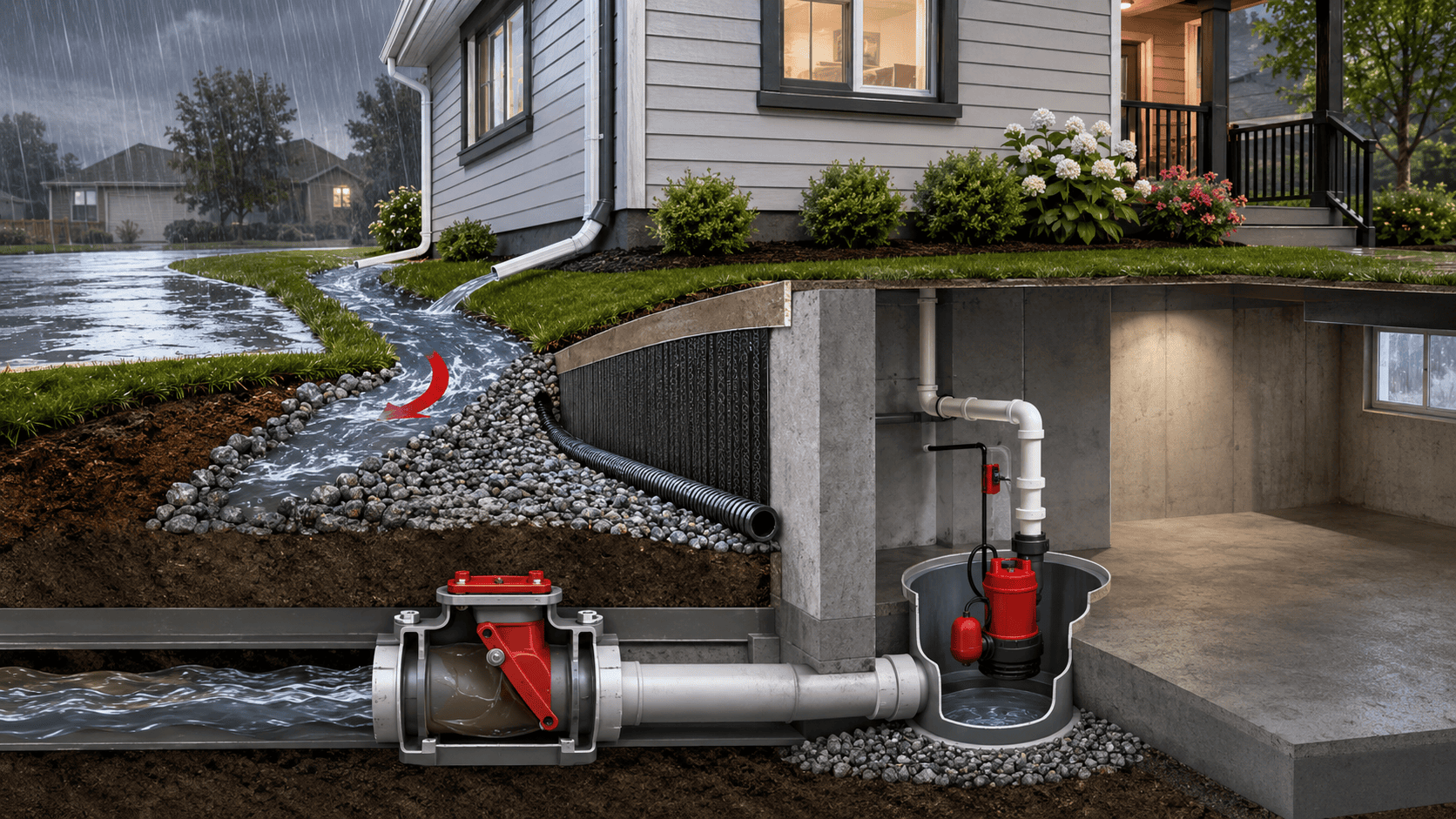
A backwater valve is a protective device installed on the home’s sanitary sewer line. Its job is to help prevent sewage from backing up into the basement if the municipal sewer system becomes overwhelmed.
Under normal conditions, wastewater flows out of your home toward the sewer. If sewage starts flowing backward toward the house, the backwater valve flap closes and helps block that reverse flow.
A backwater valve can be especially helpful for homes with:
- Basement floor drains
- Finished basements
- Older sewer connections
- Homes in low-lying areas
- History of sewer backup
- Multiple basement fixtures
- Previous flooding during heavy rain
What a Backwater Valve Can Help Prevent
A properly installed backwater valve can help reduce the risk of sewage entering through:
- Basement floor drains
- Basement toilets
- Laundry drains
- Shower or tub drains
- Other low-level basement plumbing fixtures
This matters because sewer backup is not just water damage. It can involve contaminated water, odour, cleanup costs, damaged flooring, damaged drywall, lost belongings, and health concerns.
What a Backwater Valve Does Not Do
A backwater valve is important, but it is not a complete flood-proofing system by itself.
It does not stop:
- Water entering through foundation cracks
- Water entering through basement windows
- Groundwater pressure around the foundation
- A sump pump from failing
- Downspouts from draining beside the house
- Overland flooding entering through doors or low openings
That is why the best protection usually comes from a combination of upgrades, not one single device.
Sump Pumps and Battery Backup Systems
A sump pump collects groundwater from around or below the basement and pumps it away from the home. If your home has weeping tile connected to a sump pit, the sump pump is one of the most important pieces of protection during heavy rain.
But sump pumps can fail.
Common sump pump problems include:
- Power outage during a storm
- Pump too small for the amount of water
- Stuck float switch
- Blocked or frozen discharge line
- Pump worn out from age
- Pit too small
- No battery backup
- No alarm
A battery backup sump pump can help keep pumping if the power goes out. A high-water alarm can also warn you before the pit overflows.
If your sump pump is running constantly during storms, struggling to keep up, or has no backup system, it should be inspected.
Weeping Tile and Foundation Drainage
Weeping tile is a drainage system installed around the foundation to collect groundwater and direct it away from the home, often toward a sump pit.
When weeping tile becomes clogged, crushed, disconnected, or overwhelmed, water can collect around the foundation. That pressure can push water through cracks, the wall-floor joint, or other weak points.
Signs of possible weeping tile or foundation drainage issues include:
- Water along the basement wall-floor joint
- Damp foundation walls
- Efflorescence, or white powdery staining on concrete or block
- Sump pump running frequently
- Water entering after heavy rain
- Recurring basement moisture
- Musty basement smell
Depending on the home, solutions may include sump pump upgrades, exterior waterproofing, weeping tile repair, or redirecting drainage away from the sanitary sewer where required.
Downspouts and Grading Matter More Than People Think
A roof collects a lot of water during a heavy storm. If downspouts discharge beside the foundation, all of that roof water can end up exactly where you do not want it: against the basement wall.
Simple improvements can include:
- Extending downspouts away from the house
- Making sure the ground slopes away from the foundation
- Keeping window wells clear
- Cleaning gutters
- Avoiding low spots near the home
- Making sure sump discharge drains away from the foundation
These steps may seem basic, but they help reduce the amount of water pressing against the foundation during storms.
Sewer Camera Inspections Can Help Identify Risk
A sewer camera inspection can help identify issues that may increase the risk of backups, such as:
- Tree root intrusion
- Broken clay pipe
- Sagging pipe
- Collapsed pipe
- Heavy buildup
- Offset joints
- Poor flow
- Older sewer line defects
If your home has had repeat drain issues, gurgling, basement floor drain problems, or previous backups, a camera inspection may help determine whether the sewer line itself is contributing to the problem.
Questions Homeowners Should Ask After a Flood
After a basement flood, it is important to understand where the water came from. The answer affects the repair.
Ask:
- Did water come from a floor drain or plumbing fixture?
- Did water seep through the foundation wall or floor?
- Did the sump pump fail or overflow?
- Did the power go out?
- Did the flooding happen during heavy rain?
- Was the water clear, dirty, or sewage-contaminated?
- Did more than one fixture back up?
- Has this happened before?
- Do I have a backwater valve?
- Do I have a working sump pump and backup?
- Are my downspouts draining away from the house?
- Is my sewer line older clay pipe with roots or defects?
When dealing with basement flooding, it helps to document where the water came from, when it started, how much water there was, and whether the water had colour or odour.
Does St. Catharines Offer Flood Prevention Rebates?
Yes. The City of St. Catharines’ Flood Alleviation Program helps eligible homeowners with flood-prevention work. The City states that the program can cover up to 90% of eligible costs, to a maximum of $5,000, for eligible homes. The program can support flood-prevention devices such as backwater valves and the disconnection of weeping tiles from the sanitary sewer and reconnection to a sump pump system.
Homeowners should always confirm eligibility and current program details directly with the City before starting work.
The Best Protection Is a System
The strongest basement flood protection usually involves more than one solution.
A good flood-reduction plan may include:
- Backwater valve installation
- Sump pump inspection or replacement
- Battery backup sump pump
- High-water alarm
- Sewer camera inspection
- Downspout extensions
- Grading improvements
- Window well drainage improvements
- Weeping tile review
- Foundation crack repair
- Exterior waterproofing where needed
Every home is different. A finished basement, older sewer line, low-lying lot, or history of backups can all change what should be recommended.
What To Do If Sewage Is Backing Up Now
If sewage or wastewater is backing up into your basement:
- Stop using plumbing fixtures
- Do not flush toilets
- Do not run laundry, showers, sinks, or dishwashers
- Avoid contact with contaminated water
- Keep children and pets away from the area
- Call your insurance company
- Call a plumbing and drain professional
If water is entering through the foundation or sump pit, the next step may be different than if sewage is entering through the drain. Identifying the source matters.
Final Thoughts
The flooding in Niagara is a reminder that extreme rain can put serious pressure on homes and drainage systems. While no device can eliminate every flood risk, backwater valves, sump pump upgrades, battery backups, sewer inspections, and drainage improvements can help protect your basement and reduce the chance of costly damage.
If your basement has flooded before, if your floor drain has backed up, or if you are not sure whether your home has a backwater valve, now is the time to have it checked.
Birnie Plumbing & Drains can help homeowners assess sewer backup risks, sump pump concerns, basement drainage issues, and flood-prevention options before the next heavy rainfall.