
Fall Plumbing Checklist for Hamilton Homes: 9 Steps Before the First Freeze
Hamilton winters are hard on plumbing. Freezing nights, thaws, and heavy spring runoff put stress on pipes, drains, and sewer lines that were already working hard all year. The good news is that most winter plumbing emergencies are preventable with a little work in the fall.
At Birnie Plumbing & Drains, we’re a fifth-generation family plumbing company, and we’ve spent decades helping Hamilton and Golden Horseshoe homeowners get through the cold months without a flooded basement. This is the checklist we’d follow at our own homes.
1. Disconnect and drain your outdoor hoses
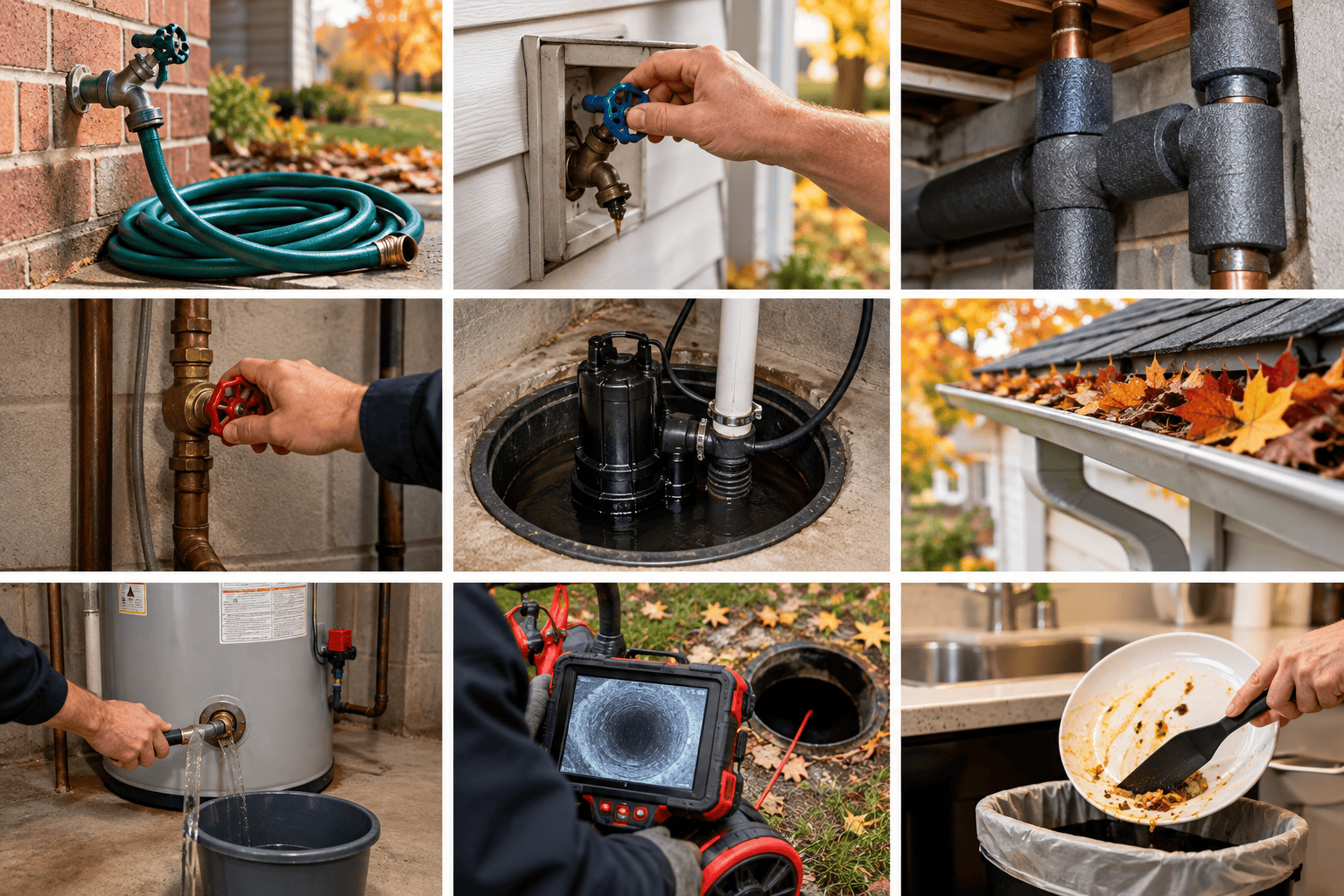
A hose left attached to an outdoor tap can trap water that freezes and pushes back into the pipe inside your wall. That’s one of the most common causes of a burst pipe we see in the spring. Disconnect every hose, drain it, and store it for the season.
2. Shut off and drain exterior water lines
If your home has an interior shut-off valve for outdoor taps, close it and open the outdoor tap to let the remaining water drain. Homes with frost-free hose bibs are better protected, but the hose still needs to come off. If you’re unsure which type you have, ask us to take a look.
3. Insulate pipes in unheated spaces
Garages, crawl spaces, exterior walls, and unfinished basement corners are where pipes freeze first. Foam pipe sleeves are inexpensive and easy to install. Focus on any run of pipe you can feel getting cold on a winter day.
4. Find your main water shut-off valve
If a pipe does burst, every minute counts. Make sure everyone in your household knows where the main shut-off is and that it turns freely. A valve that has seized after years of sitting is a problem you want to discover in September, not in the middle of a January emergency.
5. Test your sump pump
Fall rain and a fast spring thaw are the two moments your sump pump matters most. Pour a few litres of water into the pit and confirm the pump kicks on, drains it quickly, and shuts off. Check that the discharge line is clear and directs water well away from your foundation. If you have a battery backup, test that too.
6. Clear gutters and extend downspouts
Wet leaves clog gutters, and clogged gutters send water straight down beside your foundation. Clean them out and make sure downspouts discharge at least a few feet from the house. Less water around your foundation means less pressure on your weeping tile and sewer connection.
7. Flush your water heater
Sediment settles at the bottom of a tank over the year, which forces the heater to work harder and shortens its life. A yearly flush keeps it efficient going into the season when you use the most hot water. If your tank is more than 10 to 12 years old, it’s worth having a plumber check it before winter, since older tanks tend to fail without much warning.
8. Get your main sewer line inspected
Tree roots grow toward moisture and are drawn to small cracks and joints in older sewer lines. Add fall leaf fall, heavy holiday cooking, and frozen ground, and a partly blocked line can turn into a full backup at the worst possible time. A sewer camera inspection lets us see the condition of your line without digging, so you can deal with roots, buildup, or damage before it becomes an emergency. This matters most in older Hamilton neighbourhoods, where clay and cast iron lines are common.
9. Know what shouldn’t go down the drain
Canadian Thanksgiving marks the start of a busy season for kitchen drains. Grease, fats, and oils harden in your pipes as they cool, and “flushable” wipes don’t break down the way toilet paper does. Scrape plates into the compost or garbage, wipe greasy pans with a paper towel first, and keep wipes out of the toilet entirely.
If you’re going away this winter
If your home will be empty for more than a few days, keep the thermostat at 12°C or higher, open cabinet doors under sinks on very cold nights, and consider shutting off the main water supply. Ask a neighbour or family member to check in if there’s a hard freeze in the forecast.
Frequently asked questions
When should I winterize my plumbing in Hamilton?
Aim to finish before the first hard freeze, which often arrives in late October or November. Early October is a safe target.
How do I know if my pipes are at risk of freezing?
Pipes in exterior walls, garages, crawl spaces, and unheated basements are most at risk, especially if you’ve noticed cold drafts nearby or reduced water flow on very cold days.
How much does a sewer camera inspection cost?
Pricing depends on access to your line and the length of the run. Contact us for a quote and we’ll tell you what to expect before we start.
What should I do if a pipe freezes?
Shut off the main water valve, open the affected tap, and gently warm the pipe with a hair dryer. Never use an open flame. If the pipe has already burst or you can’t find the frozen section, call a plumber right away.
Get your home ready with Birnie Plumbing & Drains
Whether you want a sewer camera inspection, a water heater check, or help with a problem area you’re worried about, our team is ready to help homeowners across Hamilton and the Golden Horseshoe. Book a fall plumbing check-up today and go into winter with one less thing to worry about.