
How to Prevent Frozen Pipes in Hamilton This Winter (And What to Do If They Freeze)
The clocks went back this weekend, the evenings are getting dark early, and the overnight temperatures are starting to dip. For Hamilton homeowners, that means it’s time to think about frozen pipes.
A frozen pipe is more than an inconvenience. Water expands as it turns to ice, and that pressure can split a pipe open. The damage often doesn’t show up until the ice melts, and by then water is pouring into your walls, ceiling, or basement.
As a fifth-generation family plumbing company serving Hamilton and the Golden Horseshoe, we’ve seen what a single frozen pipe can do. The good news is that most of it is preventable.
Which pipes freeze first?
Pipes are most at risk when they run through spaces that don’t get much heat:
- Exterior walls, especially on the north side of the house
- Garages and attached breezeways
- Crawl spaces and unfinished basement corners
- Pipes under kitchen and bathroom sinks along outside walls
- Outdoor taps and the lines feeding them
If a room in your home is always colder than the rest, check for plumbing nearby.
8 ways to prevent frozen pipes
1. Seal air leaks near your plumbing
Cold air blowing in around pipes is a major cause of freezing. Look for gaps where pipes enter the house, around dryer vents, and near cable or electrical openings. Seal them with caulk or spray foam.
2. Insulate exposed pipes
Foam pipe sleeves are cheap, easy to fit, and effective. Start with pipes in the garage, crawl space, and along exterior walls. Insulation slows heat loss but doesn’t create heat, so it works best alongside the other steps below.
3. Keep your garage door closed
If water lines run through or near your garage, an open door on a cold day can drop the temperature fast. Keep it shut, especially overnight.
4. Open cabinet doors on very cold nights
Pipes under sinks on exterior walls are boxed in and cut off from your home’s warm air. Open the cabinet doors so heated air can reach them.
5. Let a faucet drip during a deep freeze
When the forecast is well below zero, let a faucet served by an exposed pipe drip slowly. Moving water is harder to freeze, and it relieves pressure if ice does start to form. It costs a little on your water bill, which is far cheaper than a repair.
6. Keep the heat on and steady
Setting the thermostat back at night is fine in most homes, but don’t let the house get too cold, especially during a cold snap. If you’re travelling, keep the heat at 12°C or higher.
7. Disconnect outdoor hoses and shut off exterior taps
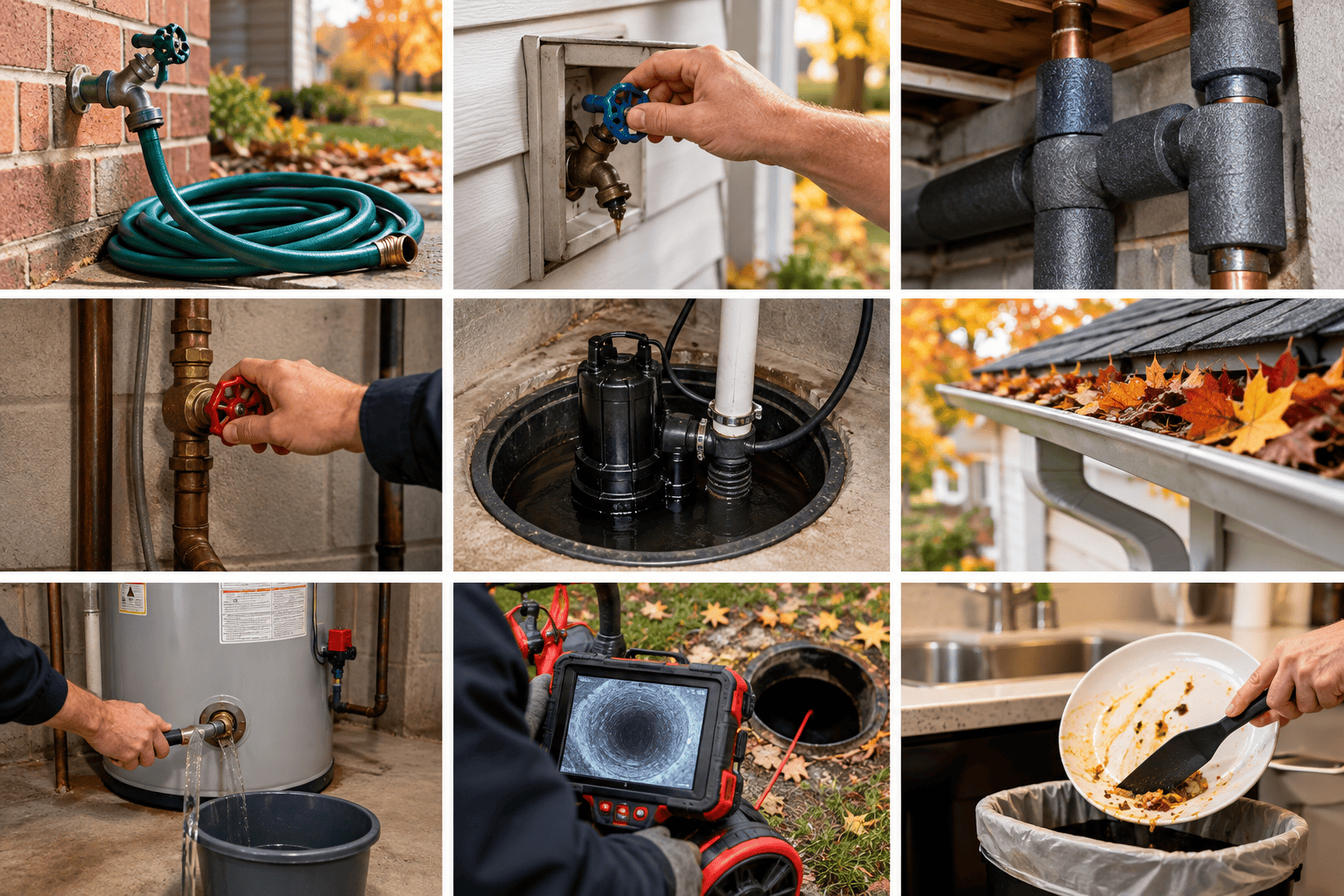
If you haven’t already, take hoses off, drain them, and close the interior shut-off valve to outdoor taps if your home has one. This is one of the most common causes of frozen and burst pipes.
8. Know where your main shut-off is
If a pipe bursts, shutting off the water quickly limits the damage. Make sure everyone in the household knows where the main valve is and that it turns easily.
Warning signs a pipe is frozen
- Water slows to a trickle or stops completely from one tap
- Frost on the outside of an exposed pipe
- Strange smells from a drain or faucet
- Pipes that make odd noises or look swollen or bulging
If only one tap is affected, the frozen section is probably close to that fixture. If nothing runs anywhere in the house, the freeze may be near the main line.
How to thaw a frozen pipe safely
- Open the tap. Leave the affected faucet open so water can flow as the ice melts and pressure can escape.
- Apply gentle heat. Use a hair dryer, a heating pad, or warm towels. Start near the faucet and work back toward the frozen section.
- Never use an open flame. Torches, propane heaters, and similar tools are a serious fire hazard and can damage the pipe.
- Keep going until full flow returns. Then check the pipe and its fittings for leaks.
If you can’t find the frozen section, it’s in a wall or floor you can’t reach, or the pipe is already cracked, stop and call a plumber.
What to do if a pipe bursts
- Shut off the main water valve right away.
- Open the taps to drain the remaining water from the system.
- If water is near outlets, appliances, or your electrical panel, stay clear and shut off power only if you can reach the panel safely and without standing in water.
- Move belongings out of the affected area.
- Take photos for your insurance claim.
- Call a licensed plumber.
Frequently asked questions
At what temperature do pipes freeze?
Pipes in unheated or poorly insulated areas can freeze when temperatures stay below zero for an extended period, and the risk rises sharply in a deep freeze. Exposed pipes on exterior walls are usually the first to go.
Should I leave my heat on if I’m away?
Yes. Keep the thermostat at 12°C or higher, and ask someone to check on the house during a hard freeze. For longer trips, consider shutting off the main water supply.
Does insulation alone stop pipes from freezing?
Not always. Insulation slows heat loss, but pipes in very cold spaces can still freeze. Pair insulation with sealed air leaks and steady indoor heat.
Can a frozen pipe affect my drains and sewer line?
Supply lines are the usual concern, but cold weather can also make existing drain and sewer problems worse. If you notice slow drains or gurgling alongside cold weather, a sewer camera inspection can help find the cause.
Need help before the cold hits?
If you have pipes you’re worried about, a cold room you can’t explain, or you’d like a plumber to check your home before winter, Birnie Plumbing & Drains is here to help homeowners across Hamilton and the Golden Horseshoe.