

Why Fall Is the Best Time for a Sewer Camera Inspection
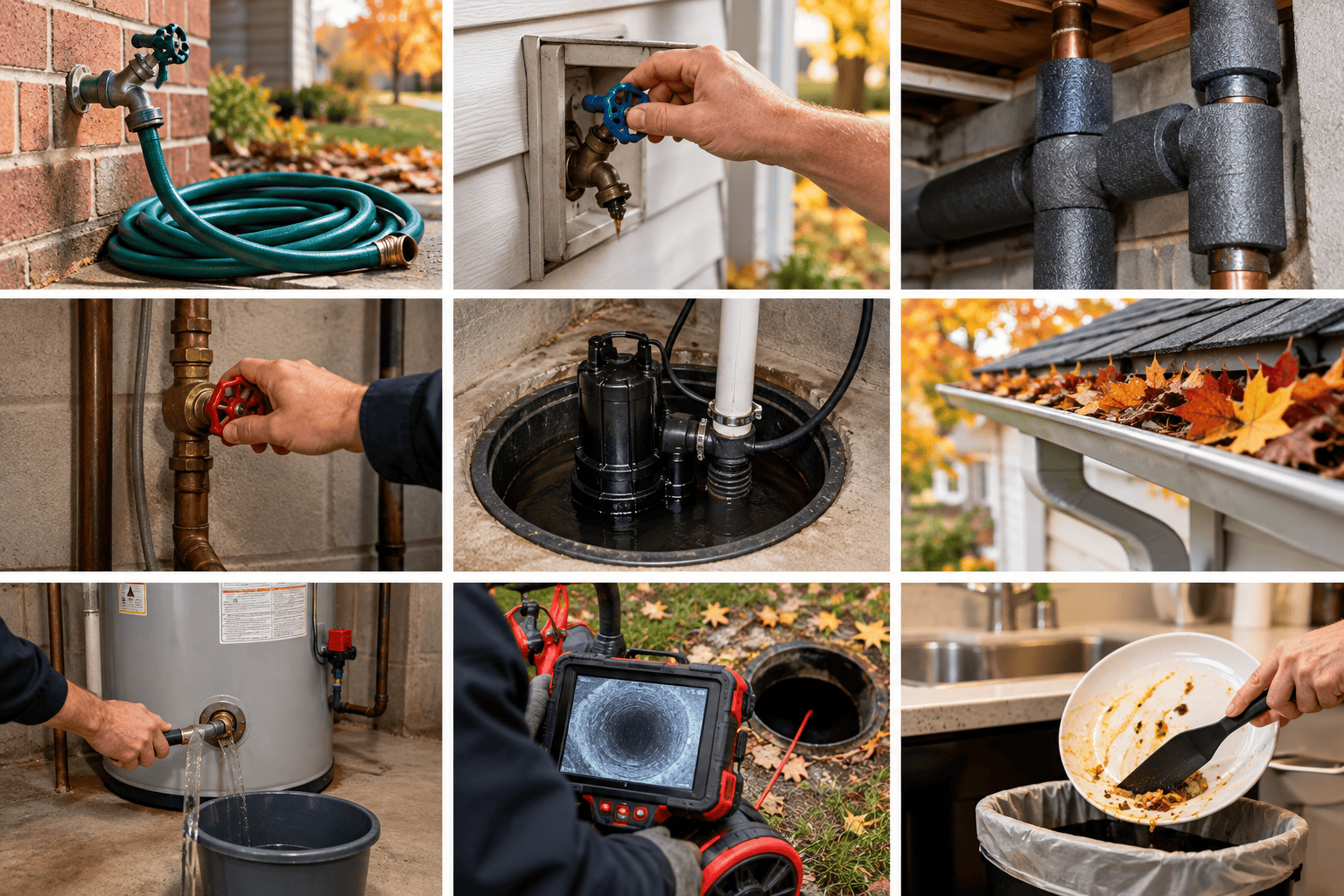
Every fall, the same pattern shows up on our service calls. Leaves come down, the ground cools, and suddenly homeowners who had no drain issues all summer are dealing with slow drains, gurgling toilets, or a backup in the basement. It’s not a coincidence. Fall is genuinely the season when sewer lines are most likely to show their weaknesses, which is exactly why it’s the best time to get ahead of the problem with a camera inspection rather than wait for it to become an emergency in January.
Why fall is hardest on sewer lines
Root activity peaks before winter dormancy. Trees push moisture and nutrients toward their root systems as they prepare for winter, and an aging clay or cast iron sewer line is an easy target. Roots find the smallest crack or joint gap and grow straight into it, and by late fall that growth has often had all summer and early fall to establish itself. A line that was fine in June can be significantly compromised by November.
Leaf and debris buildup. Older neighborhoods in Hamilton and across the Golden Horseshoe often have combined or aging municipal infrastructure nearby, and heavy leaf fall can contribute to blockages at connection points, especially after a hard rain washes debris into catch basins and drainage systems.
Ground temperature swings. As the ground cools and eventually starts to freeze, any existing pipe damage, a hairline crack, a slightly separated joint, a partial collapse, tends to worsen. Freeze and thaw cycles put additional stress on pipe material that’s already compromised, and a minor issue in October can turn into a full collapse by February.
Increased indoor water use is coming. Once the holidays hit, water usage in most homes goes up: more cooking, more guests, more laundry, more dishwasher cycles. A line that’s already partially blocked has a much harder time keeping up with that increased load, which is why so many sewer backups happen around the holidays specifically.
Why a camera inspection now beats a repair later
A sewer camera inspection is a non-invasive way to see the actual condition of your line, root intrusion, cracks, bellies, offset joints, before any of it turns into a backup. Done in the fall, it gives you a clear picture while there’s still time to schedule a repair on your terms, rather than during an emergency call over the holidays when scheduling is tighter and nobody wants a crew in their basement with family visiting.
It’s also just a more accurate read. A line inspected after a full summer of root growth but before winter freeze shows exactly what conditions you’re heading into, which makes any recommended repair, whether it’s a full replacement, a trenchless fix, or simple root cutting, much more targeted and cost-effective than reacting after something fails.
What to expect
A standard inspection is quick and doesn’t involve any digging. A technician feeds a camera through an access point and records the full condition of the line, then walks you through exactly what the footage shows. If everything looks clear, you’ve got peace of mind heading into winter. If there’s an issue, you’ve got the information and the time to deal with it properly instead of scrambling.
Get ahead of it this year
Birnie Plumbing & Drains has been serving Hamilton and the Golden Horseshoe since 1922, and fall is when our sewer camera crews are busiest for good reason. If it’s been a few years since your line was last inspected, or you’ve never had one done, now is the right time to book it, before the ground freezes and before the holidays bring extra strain on your plumbing.